Review: Vegan Fakeaway

Vegan Fakeaway intrigued me even though I don’t think home cooking can truly replace a takeaway. When I want a take away I don’t just want a specific dish I want someone else to do all of the thinking, planning, cooking, and cleaning. To give credit where it’s due the book gives some great practical tips on how to minimise the work but sometimes I don’t want to do anything. Anything. So what won me over? Well this book is written by someone in the UK so I was hoping that some of the dishes would hit the nostalgia spot. I love all my American cookbooks with their takes on Beef and Broccoli but I grew up with Chicken Chow Mein and Chinese Curry. Do other countries even have Chinese Curry? I’d hoped to find some authentic British Takeaway food within. The results were mixed.

Two slices of Tofish and a portion of chips.

The book starts with the American section where, inexplicably, we find the recipe for Beer-Battered Tofish and Chips. I do feel a lack of chip shop recipes in here. There’s no deep-fried option for the chips, no pies, no gravy, no battered sausage, or battered Mars bar. I know I’m being extremely Northern but I would kill for a chippy focused section. I thought I’d give the tofish a go though. The chips are oven baked, I’d call them wedges but they’re okay. The Tofish looks the part and is really tasty with a nice thick batter but I had issues with the recipe. This one is deep fried but there’s no indication of either the temperature to heat the oil to (why vegans need thermometers even if we’re not eating meat!) or an alternative way to test the temperature. I got called out on Instagram by someone who has never used a thermometer to deep fry but I taught myself deep frying last year, mostly from books, and if you’re new to it you need some way of knowing if the oil is hot enough. Unless you like burnt and greasy batter.

Gnocchi baked in tomato sauce, dollops of cream cheese and a dusting of pepper.

Moving on to the Italian Section then. I decided to try the Baked Gnocchi Caprese. You bake the gnocchi in a tomato and basil sauce and finish with dollops of cream cheese. It’s a one pot dish and it’s truly easy to make. You just throw everything in the pot and bake in the oven. The gnocchi end up cooked a little unevenly. It’s an okay dish, especially for the lack of effort it takes.

Onion Bahjis in top left hand corner, shown here with dal and naan bread

In the Indian section has these Candy-Stripe Onion Bhajis. The candy striping coming from a mix of red and white onions. Not that you can really tell after batter and deep frying. This time we’re told how to check the oil is hot enough by dropping a bit of the batter in. Generally I like a thicker batter but it’s a solid bhaji.
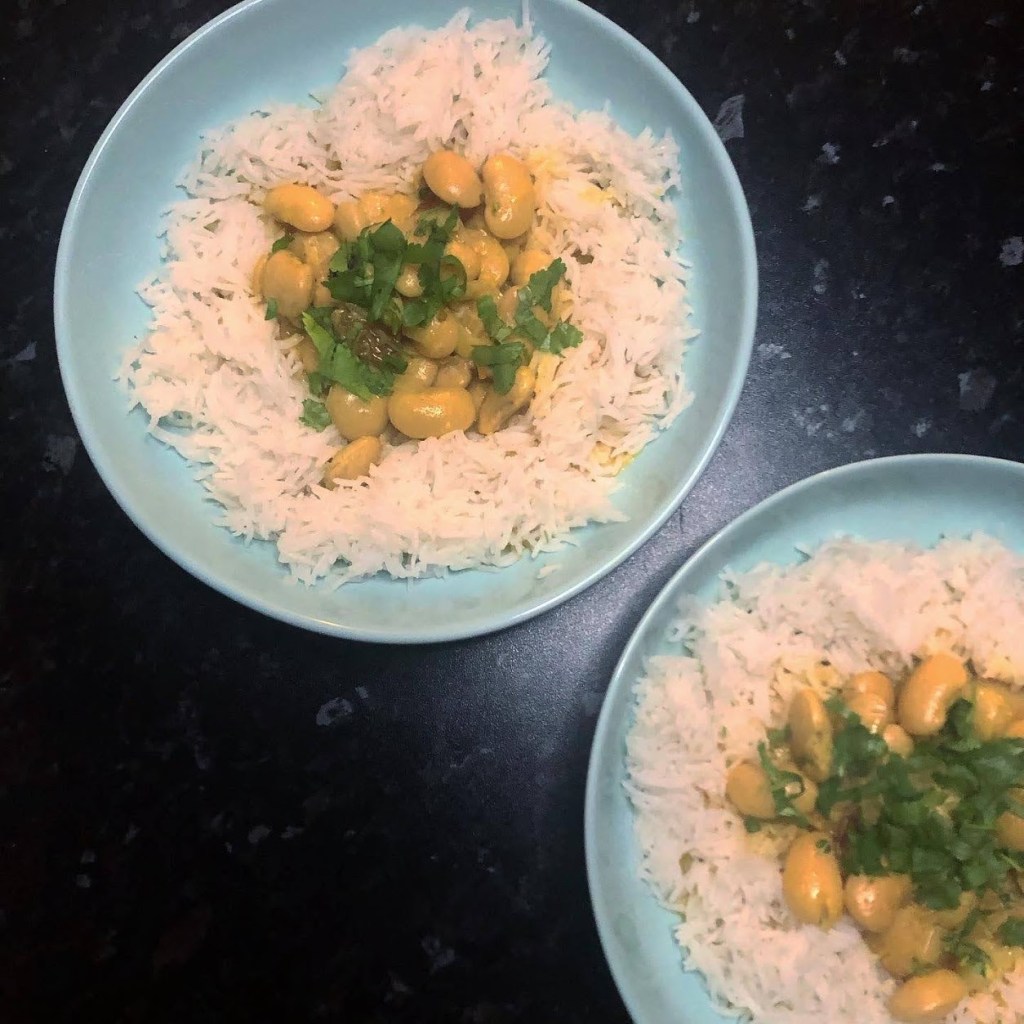
Butterbean Korma, served on rice and topped with coriander

Korma was, as a pre-gan, Kate’s favourite curry. The book offers us a recipe for a butter bean version. It does make use of curry paste to get the flavour right though. I don’t think it’s cheating. Or if it is cheating I don’t really care as long as it gets the flavour right. But I now have the rest a jar of curry paste in my fridge, and planning around using it up takes away the convenience factor for me. The Tikka Cauliflower Skewers also use curry paste but I’ve never been convinced by cauliflower as a substitute for chicken so I’m not even going to go there. Back to the Korma though. It’s delicately flavoured and butter beans are fabulous in a curry.
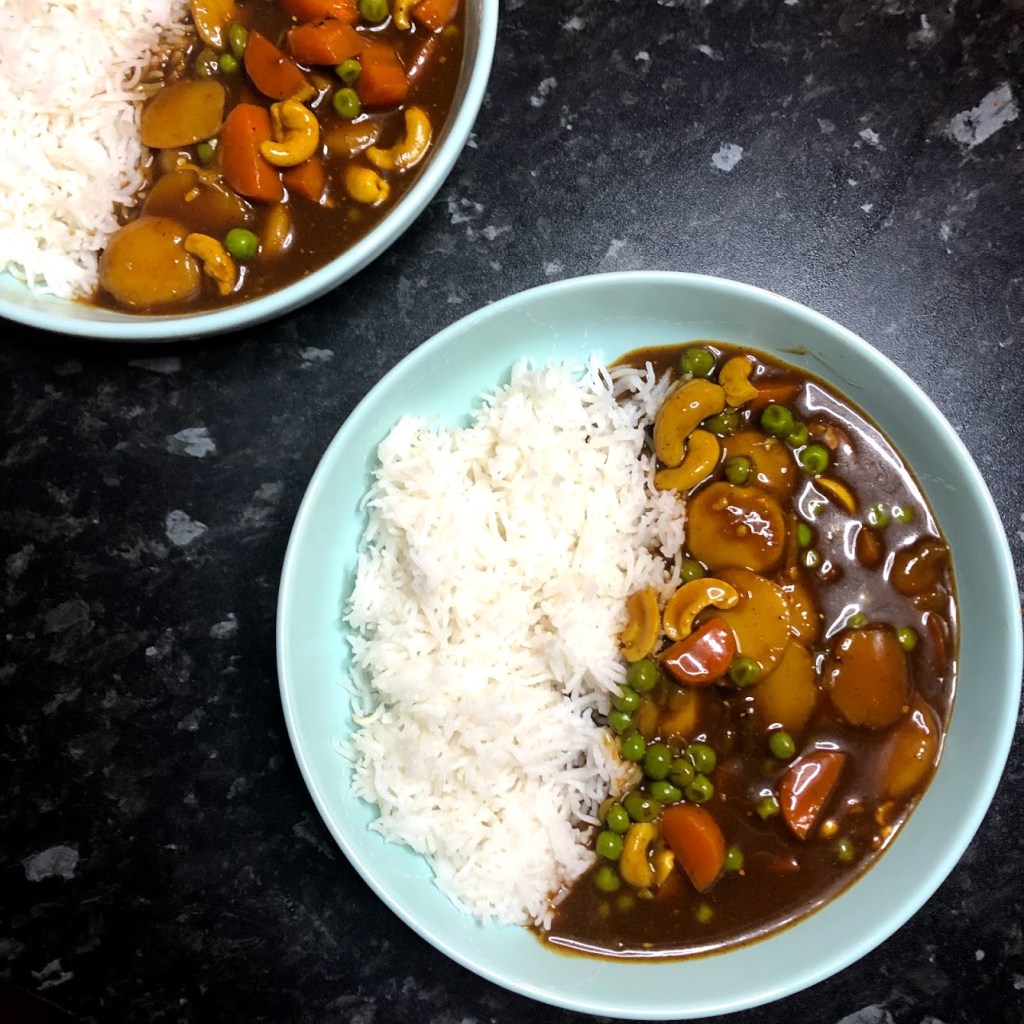
A dark, Chinese-style curry served alongside plain white rice.

Given my love for Chinese-style curry, Carrot and Cashew Chinese Curry, from the Chinese section, had to be tried. I was, however, not impressed. I didn’t think extra heat from the chilli flakes added anything. In fact it distracted from the curry, and the Chinese five spice. The flavours were just a little off-balance. It also seemed like there wasn’t much thought put into the contents of the curry. With sugar snaps and carrots and cashews and frozen peas and water chestnuts… it’s like a dish made up on the spot when a cook just puts everything vegan they have into a sauce. There’s no focus. I really wanted to like this one so I was a bit more disappointed with it than perhaps I should have been, but I just didn’t think it worked.

A casserole of chickpeas, dates, carrots, sweet potato, and parsley served alongside couscous

We head towards the Middle Eastern section for what was my favourite recipe. The one recipe in this book that I liked enough to put a smiley face sticker next to. Smiley face stickers, in case your household doesn’t have a smiley face sticker system, mark a recipe that we both love so that I can remember it when I want to make it again. It’s another one-pot dish, started on the hob and finished in the oven, but this time it’s flavourful and all the vegetables are cooked perfectly.
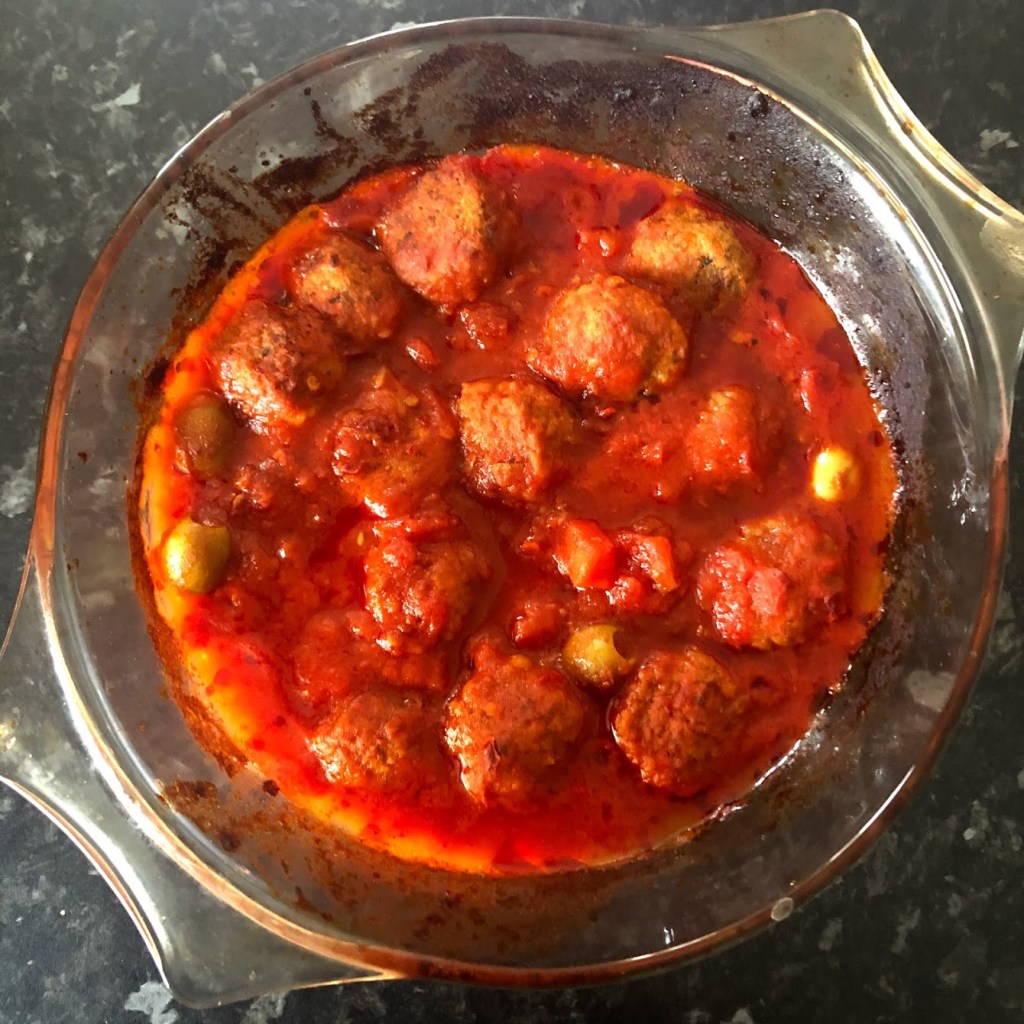
One-Pot Harissa Baked Falafel also earned a thumbs-up from me, but not Kate who doesn’t like olives. I used some truly awful sweet potato falafel from Asda in this as the recipe promised to transform even the worst supermarket falafel into something edible. It delivered.

Pita bread stuffed with jackfruit ‘doner’ meat and shredded lettuce

But now we return to the disappointing. Jackfruit Doner Kebabs. Again it just didn’t work. Perhaps it was the lack of spices. A pinch each of cumin and cinnamon is nothing on 400g of jackfruit. And jackfruit at the best of times tends towards soggy and a little sweet. Nothing was done to mitigate that. It was just lightly flavoured jackfruit in a pita. And as jackfruit has significantly less flavour of its own than lamb it’s not at all appetising. I tipped the filling out and ate the pitta plain.

We come to the part of the review where I tell you if I think this book is worth buying. I think you’ve probably noticed that we’ve had more misses than hits. Other dishes just sounded a little off like the Dirty Nachos with mayo. I’m no purist but I can’t get my head around mayo on nachos. Not in the year of our lord 2021 when every supermarket in the UK is fighting over who has the best vegan cheese. I couldn’t suggest buying this book just because it has one good tagine recipe. If you want UK-style fast food dishes take a look at Leon’s Fast Vegan instead. Well, have a look at it when you’re allowed to look at books in person again.
Review: Vegan JapanEasy

When Vegan JapanEasy came out last March I’d been weighing up which of Tim Anderson’s other cookbooks to buy. JapanEasy was tempting but I really wanted Tokyo Stories. I’m already used to veganising recipes from non-vegan Japanese cookbooks (Sonoko Sakai’s Japanese Home Cooking and Luiz Hara’s The Japanese Larder are my current faves) and veganised versions of dishes from Just Hungry and Just One Cookbook. I’m not an expert, or even close to one, but I’m fairly used to veganising Japanese food.

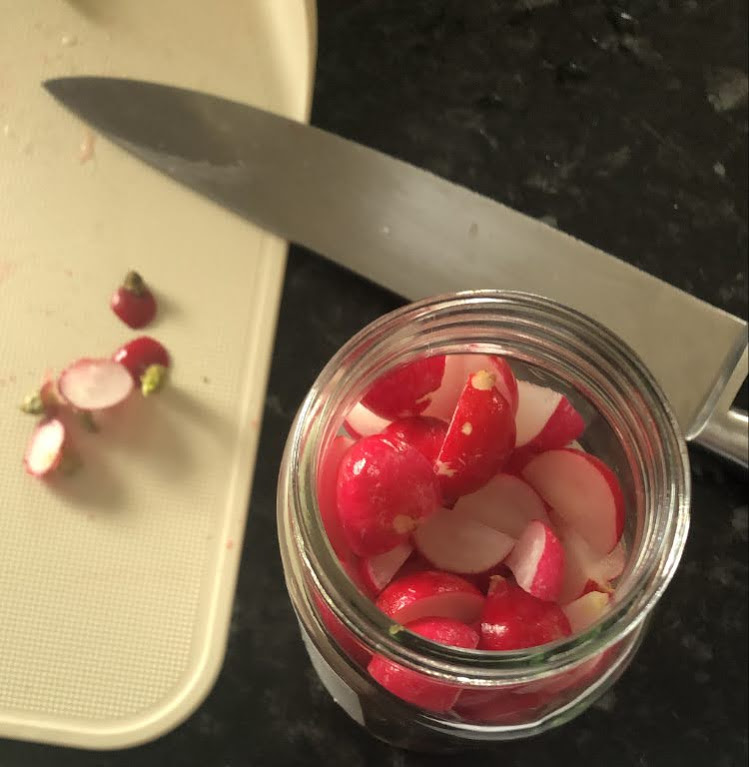
Preparing a batch of citrus-pickled radishes

When Vegan JapanEasy came out I was half excited to own a Japanese cookbook that I wouldn’t need to convert and half worried: after all, it’s been written by a non-vegan author. Don’t get me wrong, non-vegans have a lot to add to the vegan cooking scene but when writing cookbooks they do tend to make similar mistakes. Like making weird generalisations about vegan diets, saying how vegan food is all unseasoned tofu and lentils and they’re here to save us from a life of bland. Completely ignoring any innovations vegan authors have made. Thankfully Tim Anderson avoids that one but he does express incredulity at vegan sushi and ramen in a way that a vegan author probably wouldn’t, and he’s not a fan of mock meats and alternate protein sources. Which, okay, some people aren’t fans, but when it comes to recipes like Stir-Fried Cabbage and Bean Sprouts With Ginger Sauce and Cauliflower Katsu Curry they’re just not going to fill you up as much as pork would.

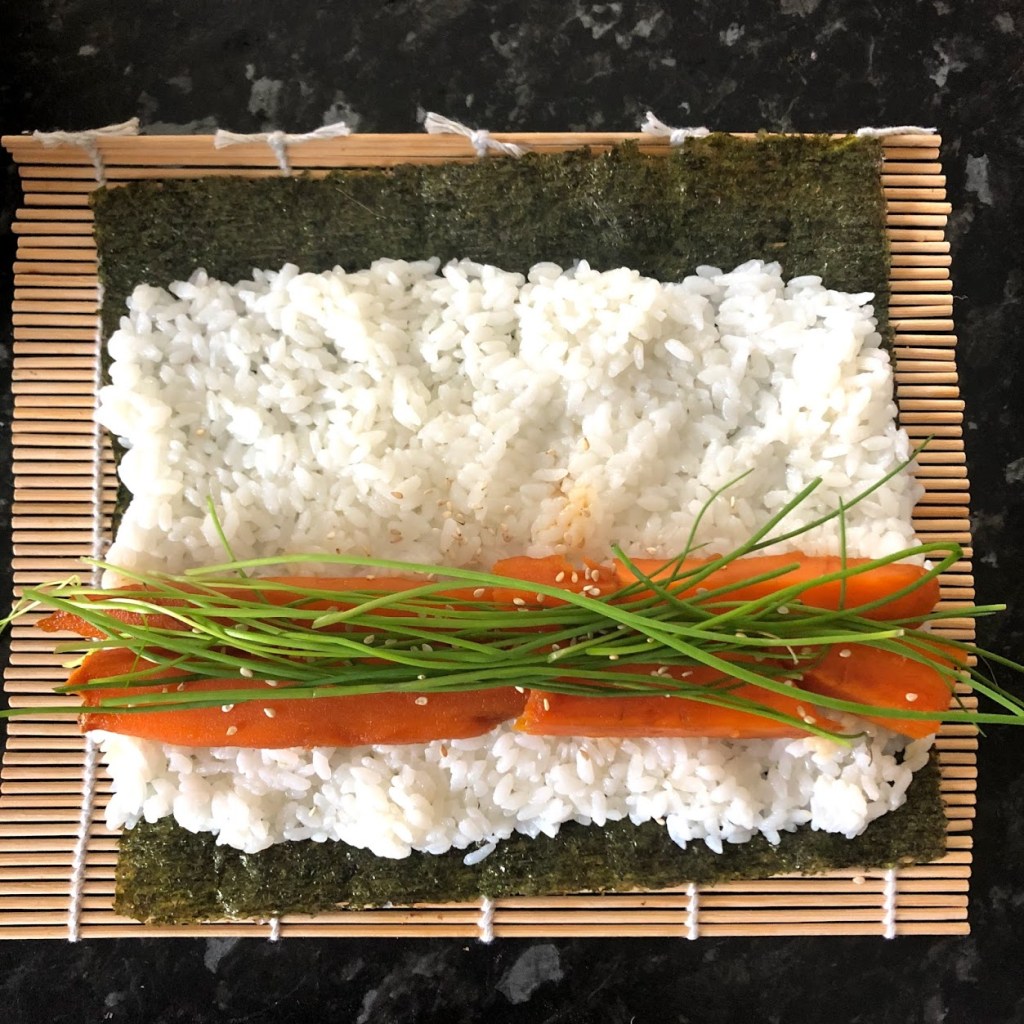
Sweet Potato Ponzu Roll, before being rolled. Nori topped with rice, sweet potato and chives.

Mostly though I enjoy his writing style. On the Amazon reviews (never to be taken very seriously) someone questioned his respect for veganism and another person complained that he talked about kebabs. But – you know what – I’m still looking for something that hits all the same spot as a greasy kebab, so I have no objections in that department. I’m a big fan of the cheesy jokes and puns and that page-long rant about what Katsu means… well I’d frame it and hang it on the wall. If I didn’t live in a small flat. Enough of the general comments then, on with the food.

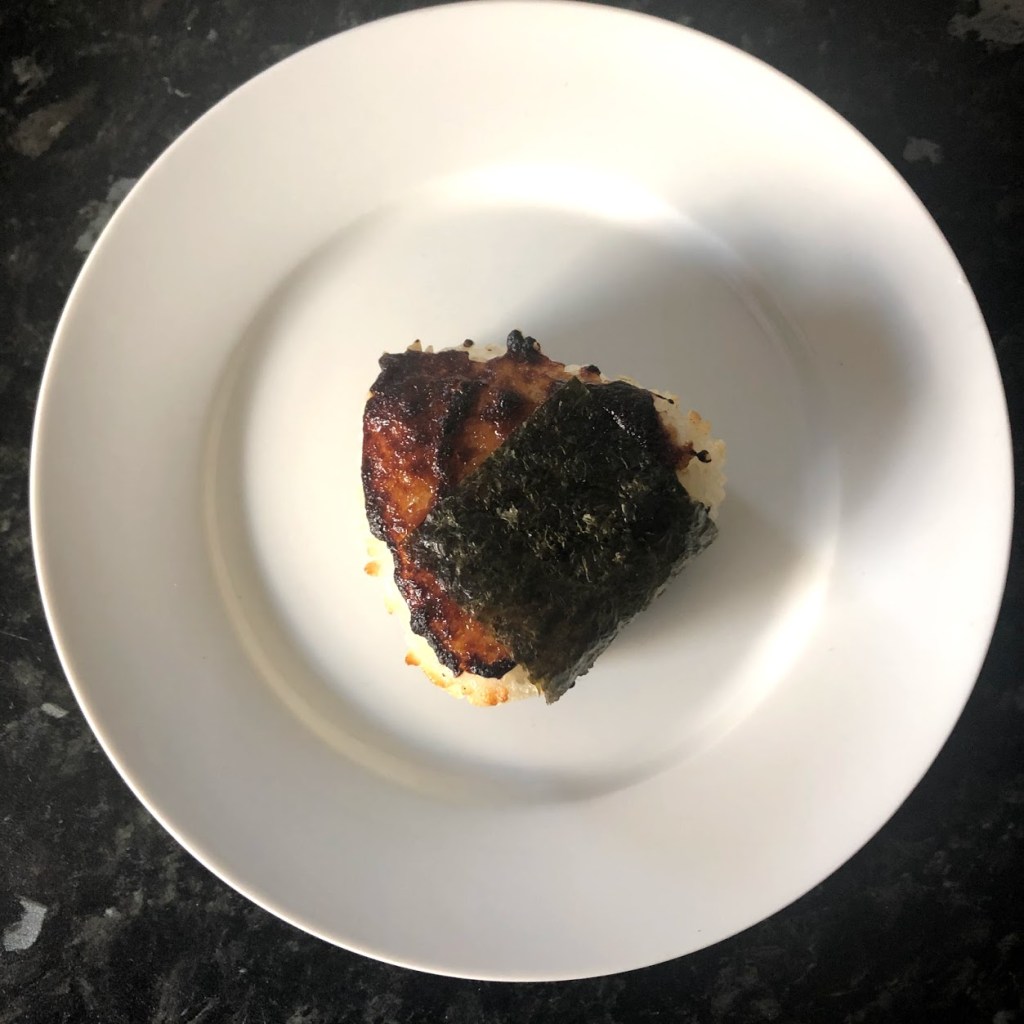
Yaki-onigri. A rice ball coated in miso glaze, grilled and wrapped with a small strip of nori

Years and years and years ago I bought myself some onigri moulds. I though it would be impossible to get that perfect triangle shape by hand. It’s not but I have the moulds now so I don’t even need to try. I made them to turn into Yaki-onigri. In which your plain rice ball is turned into a ball of rich, sweet caramelized perfection with a coat of sweet miso sauce and some time under the grill. Twice I’ve had these for lunch and then spent the afternoon drooling at the memory.

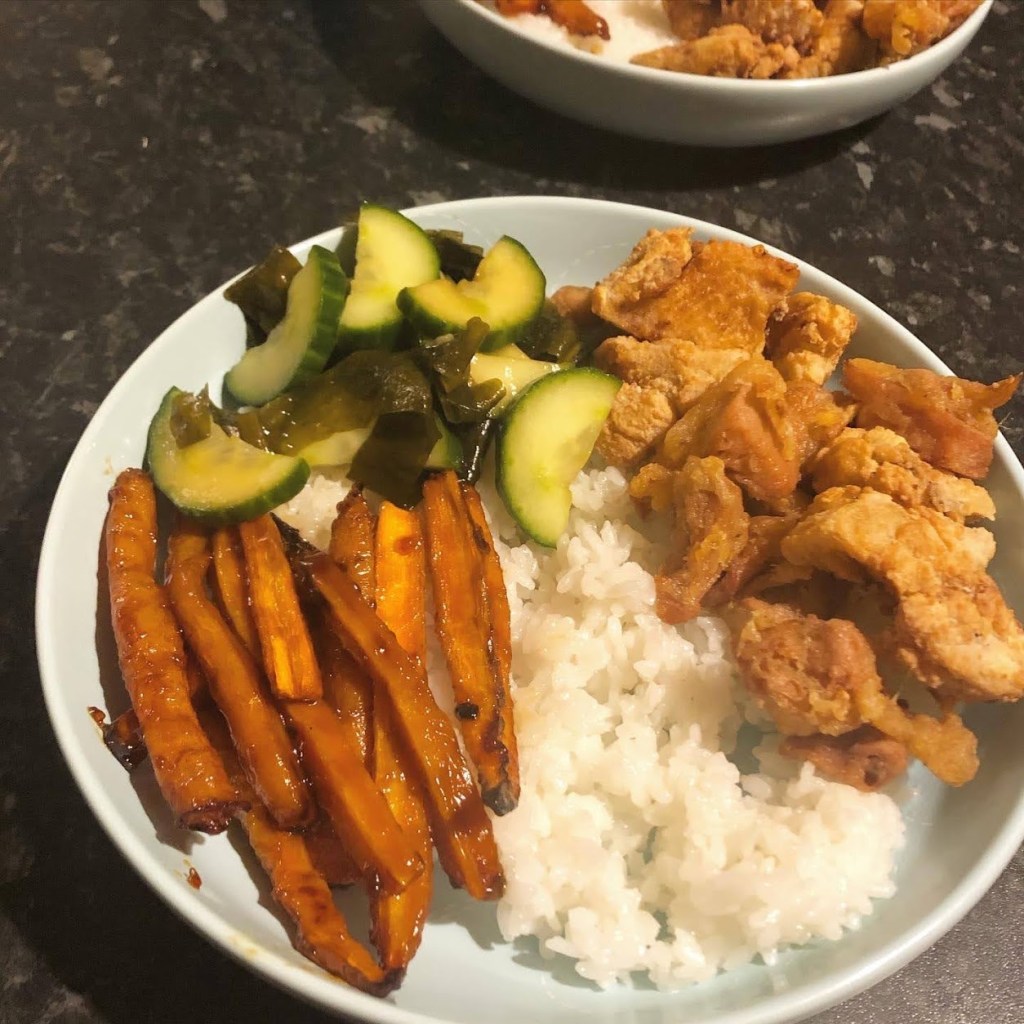
An assortment of dishes over short grain rice: teriyaki roasted carrots, cucumber and wakame with seasoned vinegar and jackfruit karaage

Teriyaki-Roasted Carrots was the next dish to try. Both roast carrots and teriyaki sauce are favourites of mine and the combination was exactly as good as I thought it would be. I’m not sure I’m entirely convinced by this version of teriyaki sauce though. Based on the sweet-soy sauce recipe earlier in the book with cornflour which makes it a bit too tacky when its baked on (we tried it on tofu as well as these carrots)

The night I made the carrots was a night where I just made whatever I had the ingredients for. Then I chucked it on some short grain rice to pretended it was a balanced meal. So there is also Cucumber And Wakame with Seasoned Vinegar (favourite!) and Jackfruit Karaage. The Jackfruit Karaage was interesting. The taste was spot-on but the jackfruit was kind of soggy. I usually make Karaage with chunks of unchicken breast from Miyoko Schinner’s Homemade Vegan Pantry and this hasn’t converted me to jackfruit.

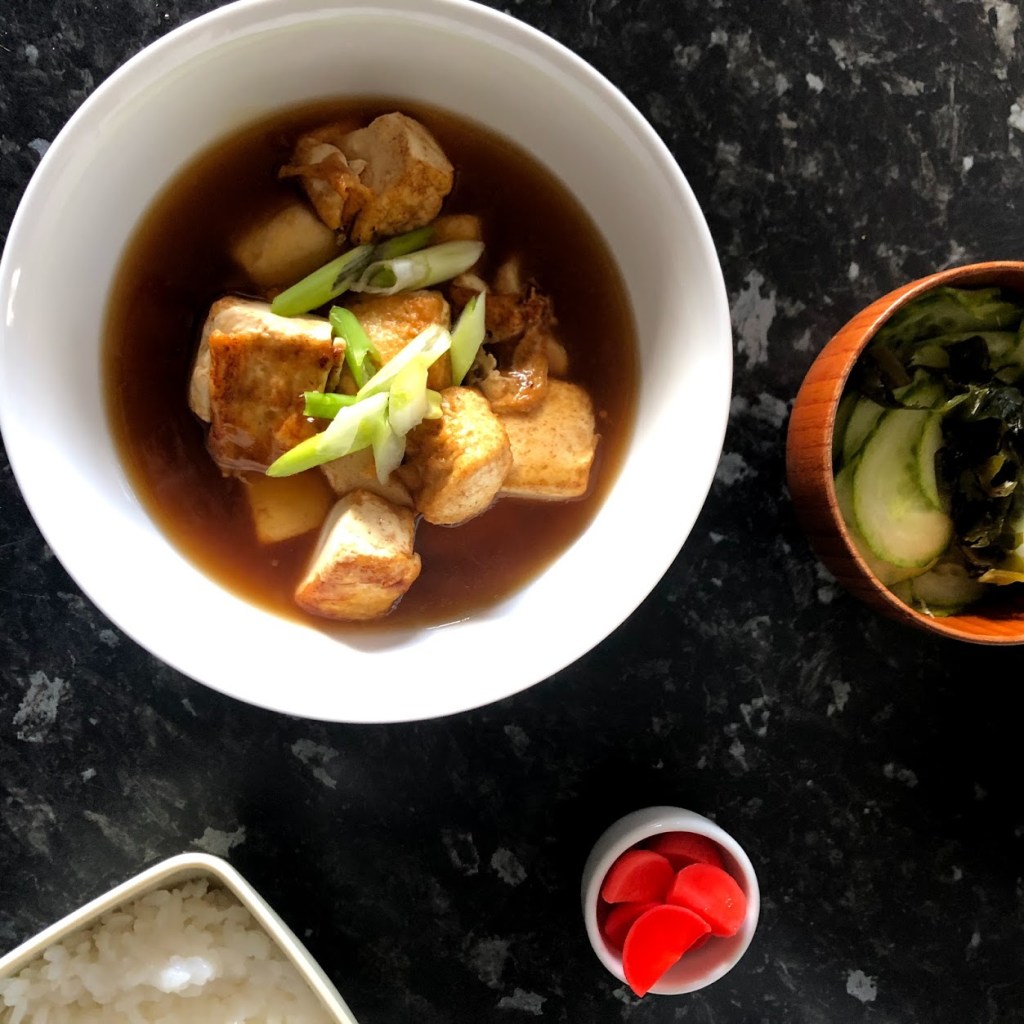
a messy rendition of agedashi tofu with more cucumber and seaweed salad and the finished pickled radishes

Just before Christmas I got a packet of vegan tempura prawns to try and figured I’d cook up a few other small dishes to go with it. It seemed like a good opportunity to try my hand at Agedashi Tofu. It turns out that I am not skilled at keeping silken tofu together as I deep-fry it. The taste made up for it though. Fresh and subtly sweet. Not exactly what you expect when you heat the oil for deep frying but perfect to eat in the middle of all those rich festive meals. Also with a fresh taste, but by no means a subtle one, I made a batch of citrus-pickled radishes. They’re a mind- and taste-bud-blowing treat.

Sweet Potato Stuffed Sushi Rolls with a small dish of citrus-pickled radishes and some cucumber and wakame salad

I couldn’t pass the Makizushi section without trying one of the rolls. I went for the Sweet Potato Ponzu Rolls because it didn’t have crushed cornflakes on the outside; sorry, but that’s a texture too far for me. The Sweet potato is baked and marinated until it’s the best sweet potato you’ve ever had, and chives make everything better. I made a batch of this to take to my Guides’ Christmas Party. It was over Zoom so I got to eat the whole batch myself.

breaded burger, cabbage and beansprouts, and rice

Kate’s very favourite dish in the entire cookbook (and possibly her favourite thing I make at all right now) is the Mock Meat Menchi Katsu. Tim Anderson hated all vegan burger attempts before trying the Beyond Burger which he says is ‘life-changing’ (considering how much money I’ve put into the pockets of the Beyond Burger people through this pandemic I can’t argue with that) so he suggests using it here. I knew though that the serving suggestion of raw cabbage would not be met with Kate’s approval so I thought maybe Stir-Fried Cabbage and Bean Sprouts with Ginger Sauce would be better. I thought it was great. Bags of ginger flavour. But Kate hates cabbage in all forms and would, in future, prefer her fried, breaded burgers without vegetables.

Last up is today’s lunch – curry ramen – so I can remember both the brilliant taste and burn on my tongue because I couldn’t wait to eat it. So good! I like Japanese curry in all its forms so if you drown carbs in it and cover with crunchy veg I’m going to be very happy.

Should you buy this book? Well, if you’re vegan and new to cooking Japanese food this is 100% perfect for you. But it is, after all, JapanEasy so if you’ve got a bit of experience under your belt you might only find recipes for things you know. If so you still might find it worthwhile to have a collection of recipes that are already veganised and ready to go. I know I do.

Recipe: Burger Buns with Nigella Seeds

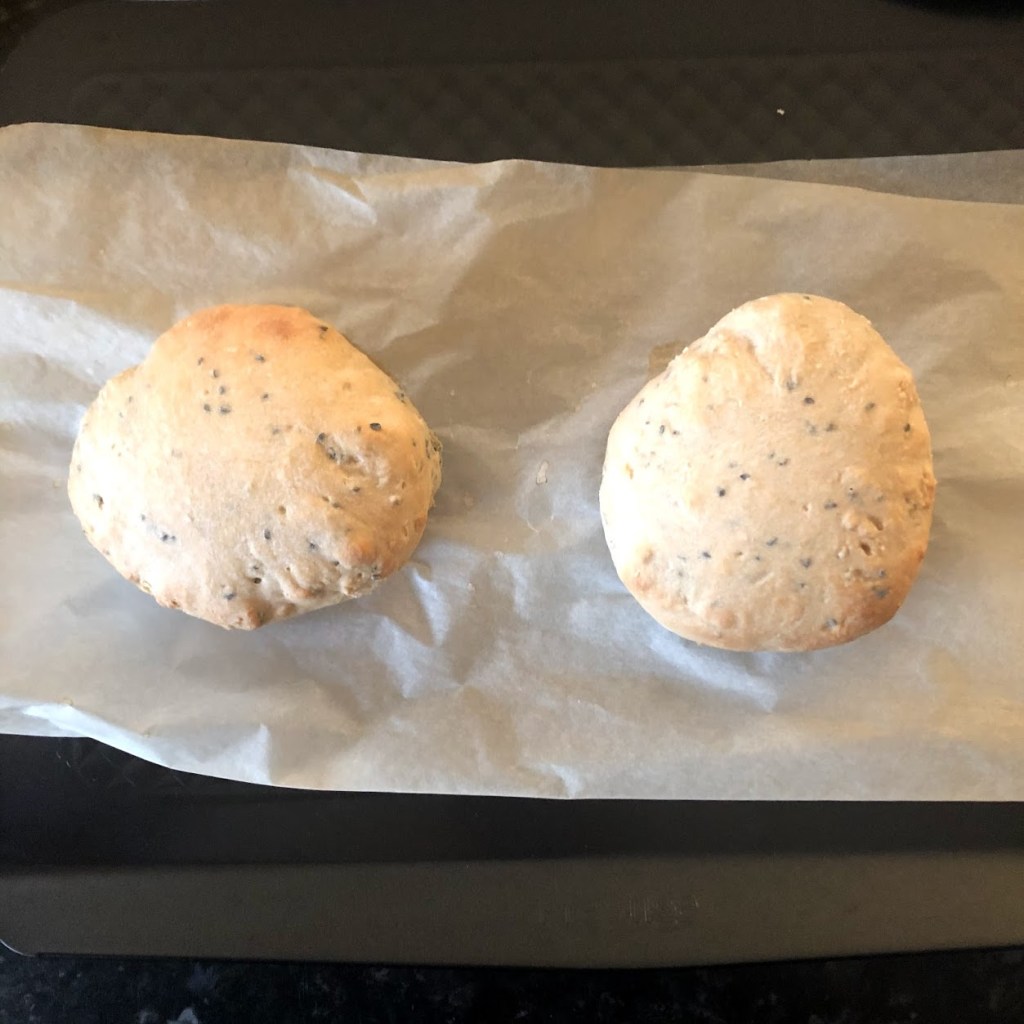
When presented with a burger with Italian-inspired flavours I made Foccacia style buns. When I started turning leftover curry into the Carefree Curry Burges from Post Punk Kitchen I felt that I needed to carry on the tradition. I decided to make a bun studded with beautiful nigella seeds to compliment those India flavours. Not that all curries and curry burgers are Indian. Last time I made Japanese Style Curry I made a double batch so I could turn the leftovers into Curry Burgers for the freezer. They’re really yummy, quick to heat up from the freezer and go really well with these buns. Though so would a Beyond Burger with some of that gorgeous, slightly spicy Leon Ketchup. Or sausages with cream cheese and chilli jam for a take on Dishoom’s famous breakfast sandwiches.

Burger Buns with Nigella Seeds
(makes 2)

125g strong white bread flour
75ml warm water
1/2 teaspoon dried yeast
1/4 teaspoon salt
2 teaspoon vegan yogurt (we use Oatly’s Oatgurt)
1 teaspoon nigella seeds

Mix all the ingredients together and knead for a couple of minutes until a nice strong dough has formed.

Cover with a tea towel and leave to rise for one hour.

After the hour is up, shape the dough into two flat disks. Place on a baking tray to prove and cover again. At this point preheat the oven to 220ºC. Leave the buns to prove for a further 30 minutes.

After proving bake the buns in the oven for ten minutes, or until lightly browned.

Review: Food By Sumear (and Trímma Tart Recipe)

At the start of lockdown I was cleaning out my freezer. I found some frozen cream cheese culture from my dairy days. Kate and I were big into cheese: supermarket cheese, artisan cheese, home-made soft cheese. And once, after a stomach bug, I wanted to eat nothing but Dairylea. Dunno why, it was really awful, but our bodies are sometimes weird like that. The point is that we liked cheese. When it comes to vegan cheese we’ll try just about anything, we enjoy a lot of it but there is only one cheese that we love as much as we love its dairy counterpart, and that’s Food by Sumear.

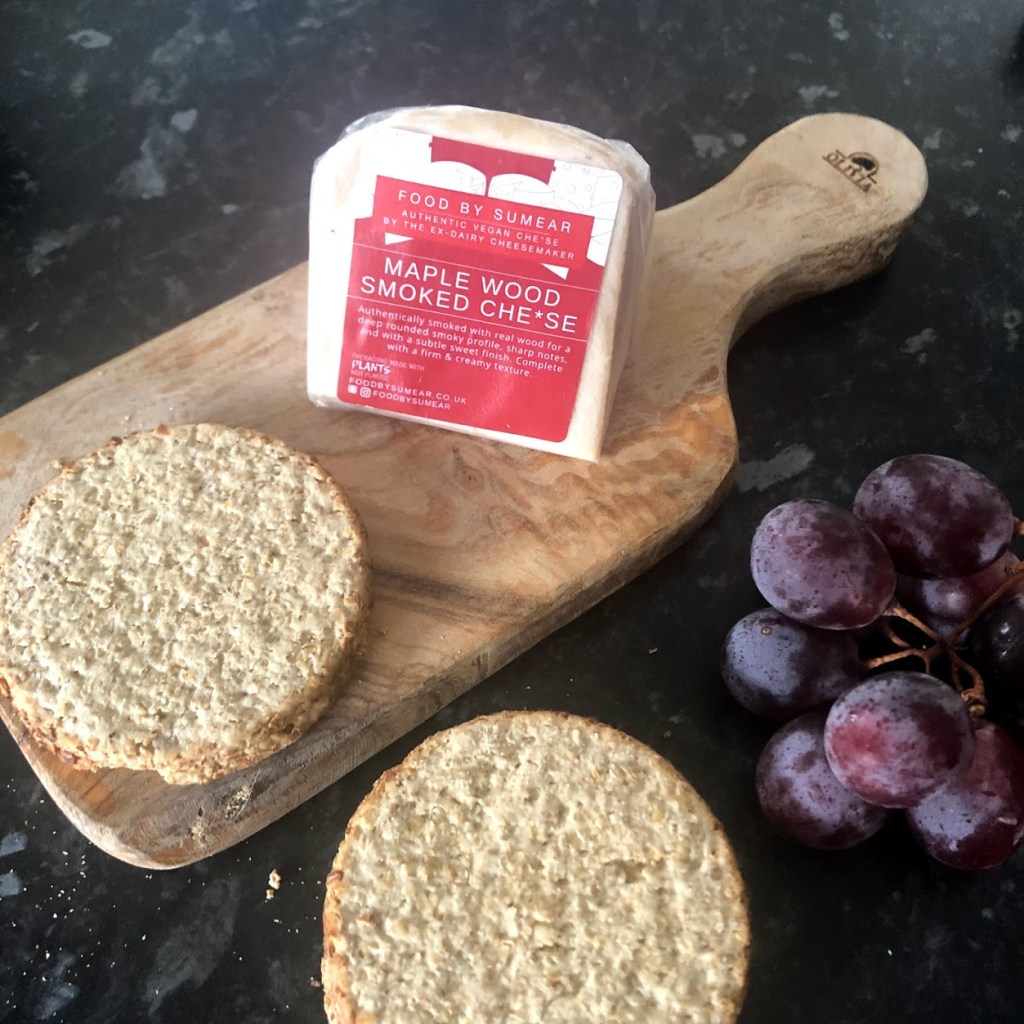
I should point out that we’ve been ordering these cheeses since May but we haven’t managed to blog about them so far because we keep putting them in our mouths. They arrive. We think “should we arrange them with some oat biscuits for a picture?”, and before we’ve even managed to finish the thought we’re just opening it to try a little bit… and then it’s gone. We’ve never managed to make a fancy cheese board up. But then it’s not like we’re having guests is it? And we do get plates out and sit down. It’s not like we eat it straight out of the fridge. That’s a specific denial, isn’t it?

So what’s so special? Well these are proper hard cheeses. They have the depth of flavour that can only come from time and cultures. The smoked cheese is really smoked. The blue cheese isn’t just flecks of spirulina (I bought a book for its blue cheese recipe once; that the secret was just making it blue the colour rather than anything that mimicked the taste was beyond disappointing). There is a quality to them that’s unlike any other vegan cheese I’ve tried.

I’m focusing on the hard cheeses and so did my first couple of orders. Because supermarket vegan cream cheese is okay, isn’t it? And my home-made stuff is a bit better than okay, so I’m covered for vegan cream cheese and I don’t need any Crèmou. And I’m sure that I kept telling myself this because I knew that if I tried it I would become an instant convert. I ordered a pot, made some bagels, and they were the best bagels with cream cheese I’d ever had. It’s so rich, so creamy. honestly it’s better than most of the dairy cream cheeses I ate back in the day. I know Kate definitely thinks the soured cream is better than any of the dairy ones she ever tried. I put some on our enchiladas one night and she went from tolerating me feeding her Mexican food to asking when we could have more.

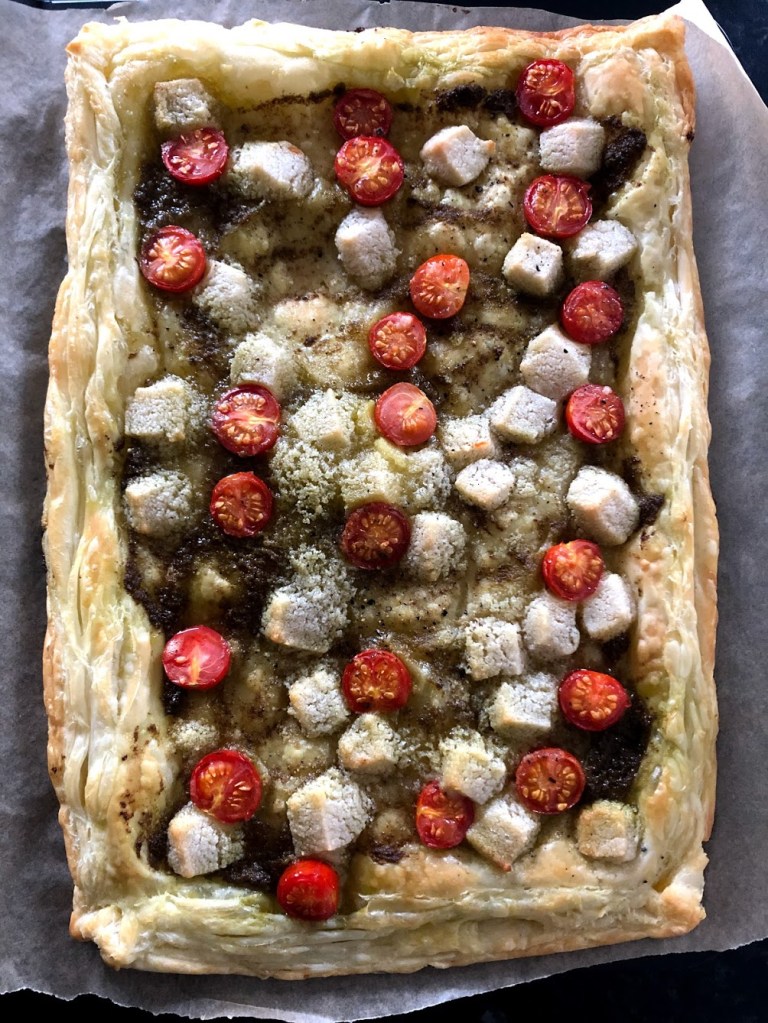
The last product I want to mention is the Trímma, Greek-inspired cheese. I’m mentioning it last because I want to include a recipe-ish. A recipish. I used to make this tart when I worked at the coffee shop and we had some Greek-style vegan cheese (of a lesser brand) that we needed to use up. I’d pick up a pack of Jus-Roll on the way in and use up some tomato and pesto otherwise destined for paninis. Back then I’d cut it into six to make single servings, and so it would fit in the dinky toaster oven. You can make it as one big sheet or cut four triangles. As this is a recipe dreamed up for using leftovers, the quantities are very forgiving.

Trímma Tart

(makes 1 large or 4 small)

1 Vegan Puff Pastry Roll (get the ready-rolled kind; we use Jus-Rol)

2 tablespoons of pesto (you can make your own but Tesco does a good free-from one)

A handful of cherry tomatoes, halved

50-100g Trímma cut into blocks

Remove the puff pastry from the fridge ten minutes before you want to start cooking and preheat the oven to 200°C.

After ten minutes unroll the pastry. Either place it whole onto a baking tray, or cut it in half, cutting each half into two triangles.

Turn the edges of the pastry in.

Spread the pesto over the base of the tart. Put the tomatoes and Trímma on top.

Pop in the oven and bake for 15 minutes until the crust is going golden and the Trímma is lightly melted.