Chilli, you may be thinking, isn’t that impressive as a meal. It’s pretty standard. So why do I think it makes a great conversion meal? Well most people care about animal suffering and they’ll admit that vegan food tastes good but a lot of people think being vegan is impossibly hard.
Chilli is not impossibly hard. It’s easy. It’s tasty. You can save extras for leftovers, scale up for a large group, cook it on an open flame, cook it in your kitchen, serve it with rice or spuds, or spaghetti. It’s also ridiculously easy to convert your existing recipe to be animal free. You can use one of the meany veggie mince substitute on the market, fill it with veggies, or do what I do and bean it up.
Black Bean Chilli
1 tbsp oil
1/2 onion, diced
2 cloves of garlic, minced
1 tbsp ground cumin
1 tbsp ground coriander
2 tsp smoked paprika
1 tsp chilli powder
1 tsp oregano
1/2 tsp cinnamon
1 400g can of chopped tomatoes
1 400g can of black beans (or one cup dried beans cooked)
Salt to taste
1. Heat the oil in a pan over a medium high heat and add the onion, cook until translucent.
2. Add the garlic and spices and cook for 30 seconds or so until the spices are fragrant
3. Throw in the tomatoes, then fill your tomato can half full with water (or half empty) and pop that in the pan too. Add the can of black beans and simmer for twenty minutes.
The worst catered meal was a butternut squash risotto. It was bad. It was the vegetarian option for a ball with over a hundred participants. By the time it got to me it was more like paste. As in wallpaper paste. The rice was almost disintegrating and I can’t even remember it tasting of butternut squash. To add insult to injury it also had kale in it. Rather than adding some texture and variety to my bowl of slop it just added to the sadness of it all. The kale was so overdone it was grey. I don’t even know how you overdo kale like that.
I still can’t eat butternut squash risotto. I basically just stick to my tomato one. But I thought I’d experiment with this one. Bringing in the fresh flavours of Thai Green Curry Paste and stirring in spinach right at the last minute so it still has some bite.
Thai Green Risotto with Spinach
(serves 3 realistically, 2 greedily)
2 tablespoons Olive Oil
Half an onion, diced
4 tablespoons Thai Green Curry paste
2 cups risotto rice
1/2 cup coconut milk
4 cups Vegetable Stock
2 cups baby spinach
First set the instant pot to saute. Heat the olive oil and fry the onion until translucent, then add in curry paste and fry for a couple of seconds until fragrant.
Add the rice to the pot, and stir. Let the rice toast until most of the grains are translucent. Keep stirring to stop it from sticking.
Add the stock and coconut milk and stir it all together. Pop on the lid, press manual and set the timer for five minutes.
Once the time is up open the valve for a quick release. Open up and stir in the spinach, allow it to wilt and then serve.
We spied a packet of dried fava beans in Seasons in Exeter. Kate asked me if I could make something with them. I mean in theory I guess. I’ve been trying to get more pulses into our diets and my main method has been dhal. Now here was Kate asking me to cook some pulses and I was just shrugging. Never made a fava dhal.
First a note on the beans themselves. They are produced by Hodmedods who grow beans here in the UK which is pretty cool. It’s always exciting to try things that are new to us, especially if they are grown in Yorkshire.
So how to make these new to us pulses into a dhal we’d both enjoy? I looked to my cookbooks. I wanted a recipe to use as my base but I knew that the fava beans would bring their own distinctive taste. I went for the Thomi Mahaar Dhal from one of my favourite books Cooking Like Mummyji. I simplified a little, left it a little wet, and changed the pulses from urid to fava. Lets go!
Ingredients
1 cup split fava beans
2 teaspoons salt
1/2 teaspoon turmeric
2 tablespoons oil
One medium onion, diced
4 cloves garlic, minced
Half of a 400g can of tomatoes, blended
1 tablespoon of ginger, minced
1 teaspoon garam masala
1/2 teaspoon asfoetida
1. Bring the split fava beans to boil in 2 cups of water. Add the salt and turmeric. Cover and reduce to a simmer. Cook for an hour, stirring every so often. Add more water if the pan gets too dry.
2. Keep the beans on a low heat while you fry the topping. Heat the oil in a frying pan, add the onions and garlic and fry until golden, reduce the heat and add the spices and tomatoes.
3. Fry until the oil begins to come through, making the sauce look nice and shiny.
4. Put the beans into the serving dish and pour the stuff in the frying pan on top.
This risotto started life as this Tomato and Chilli Risotto I wrote about on my old blog. Through repetition it has become something more. I started by removing the chilli which straight away made it more Kate-friendly. Then I bought an Instant Pot. In delivery limbo I read every website I could. I found this guide and promptly squished it together with my existing recipe. The final touch came with reading Vegan For Everybody were they added miso to their risotto for a dairy like creaminess and umami power. Surely that would also work for my humble tomato risotto? Surely it did.
A Very Rough Guide To Stock In An Instant Pot
As good stock is the basis of good risotto it’s best to make your own. I usually ended up cursing myself and changing the menu to ‘Pasta, Again’ before I had the instant pot because I’d forget to put some on. However it takes thirty mostly hands free minutes to get hot stock out of an instant pot. So no excuses for me any more. You can also buy stock if you aren’t against walking to the shop. I usually am.
To make my stock I quarter (but not peel) an onion, and roughly chop a carrot. Other bits and bobs can go in but that is my basic. I switch on the saute function and heat a table spoon or so of olive oil. In that I fry the veg along with some whole peppercorns and bay leaves. When the carrots have started to brown the water goes in. I generally fill it a third of the way up. Turn saute off, pop the lid on and heat on manual for five minutes followed by a natural release.
And Now For Your Regularly Scheduled Recipe
(serves 3 realistically, 2 greedily)
2 tablespoons Olive Oil
Half an onion, diced
375g/2 cups risotto rice
1 400g can of tomatoes
Vegetable Stock
2 Tablespoons White Miso
First set the instant pot to saute. Heat the olive oil and fry the onion until translucent.
Add the rice to the pot, and stir. Let the rice toast until most of the grains are translucent. Stir every so often to keep from sticking.
looking toasted!
While the rice is toasting put the tomatoes into a blender with the miso. Add the stock until you have one litre or four cups of liquid and blitz until smooth.
Once the rice is toasted turn off the saute and pour in you cooking liquid. Taste and add salt if you think you need it. This will largely depend on your miso.
Five minutes to risotto
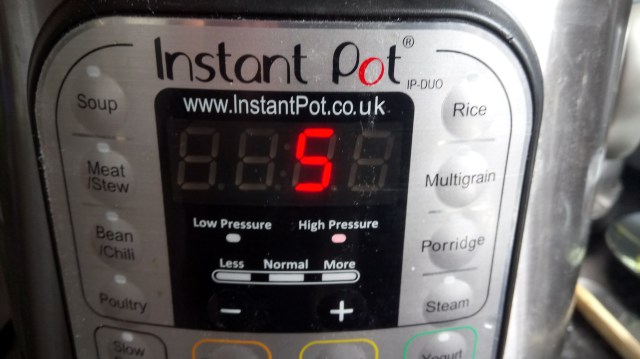
Pop on the lid, press manual and set the pot to go for five minutes.
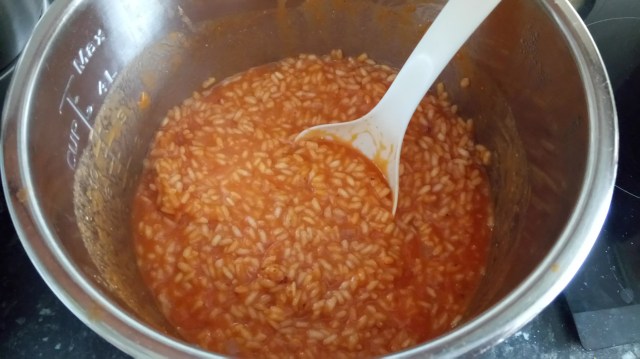
Runny Risotto, before stirring.
Once the time is up open the valve for a quick release. When you look at your risotto it will be a bit runny. Don’t panic. Give it a stir and it will be perfect. Serve.
Perfect to serve: after stirring
Or Cook On The Hob
Put the tomatoes in a blender with the miso. Top up with stock until you have one litre or four cups of liquid and blend.
Heat the olive oil and fry the onion over medium heat until translucent. It will take about 2-3 minutes. Take care not to let anything brown.
Add the rice and stir to mix, cook for about a minute before adding half of the liquid and salt if necessary. Simmer for ten minutes, stirring every now and then.
Add the remainder of the stock and tomato, simmer for around ten minutes more until the rice is cooked. If you feel you need more liquid just add some water.
Test often, different brands cook at different rates. Once the rice is cooked to your liking taste for seasoning and serve.



 Coastal Vegans